

As some families in Nova Scotia’s Annapolis Valley face concerns after learning they might not have the correct ashes of their deceased relatives, a DNA testing expert indicates that while technology may provide a glimmer of hope, it is unlikely to definitively identify the remains.
Earlier this month, multiple families who engaged the former Serenity Funeral Home were informed by the new owners that the ashes of their deceased loved ones were discovered in storage.
Michelle Carey utilized Serenity’s services when her father, Hendrik (Hank) Sabean, passed away in 2018. Sabean had outlined particular wishes for his funeral, including arrangements with the funeral home.
Now, faced with the prospect of re-burial and uncertainty regarding the true identity of the remains they buried, Carey expressed doubt about ever confirming whose ashes they actually interred.
“My sister and I did some research and discussed it, and it seems extremely challenging to conduct any DNA testing,” Carey said. “How can we be sure that what we receive is indeed our father’s remains this time?”
Dean Hildebrand, who oversees the forensic DNA lab at the British Columbia Institute of Technology, stated that extracting sufficient DNA from ashes for identification is quite difficult.
“It’s not that some scientists haven’t reported finding trace amounts of DNA,” he noted. “However, discovering those trace amounts is different from being capable of utilizing that [DNA].”
Hildebrand mentioned that DNA is surprisingly resilient, as labs frequently obtain complete DNA profiles from human remains that have been subjected to fires in cars or buildings, despite the resulting damage.
However, the extreme conditions in a crematorium—reaching temperatures of 900°C for several hours—lead to the complete destruction of all organic material.
“This is essentially a worst-case scenario for identification,” Hildebrand remarked.
Throughout his career, he has encountered situations requiring the identification of remains from ashes that had been mixed with those of other deceased individuals in various funeral homes. In this particular scenario, the new owners of Serenity Funeral Home, East Coast Memorial, have indicated a significant number of remains are involved.
Although the chances of successful identification are slim, Hildebrand believes it is not entirely beyond reach.
He mentioned that testing could still be valuable if a fragment of bone is available to extract usable DNA.
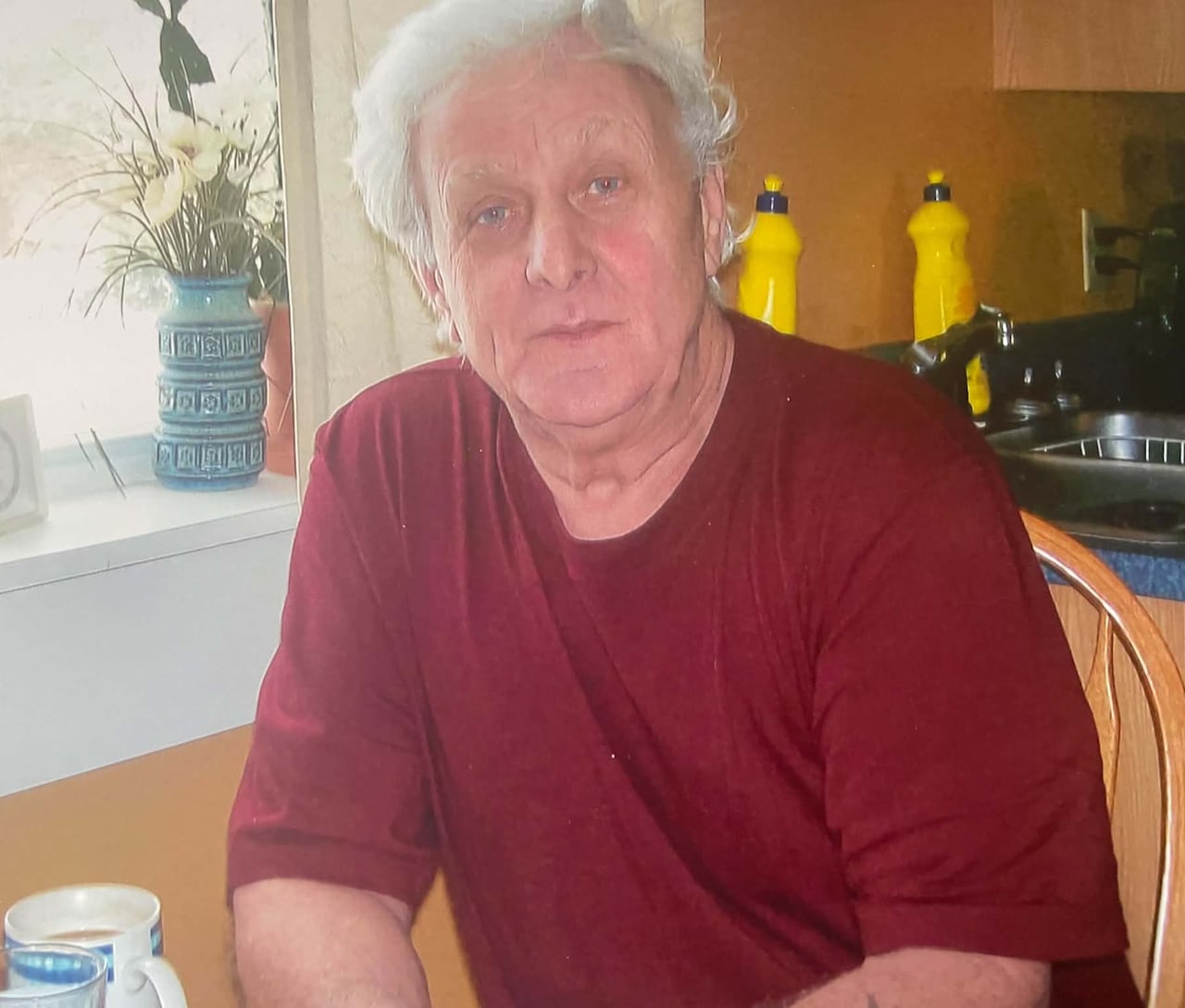
Hendrik (Hank) Sabean was 67 when he passed away in 2018. He had specific funeral wishes, which included arrangements with Serenity Funeral Home for his service and the burial of his ashes. (Amanda Sabean)
“I believe it’s worth pursuing,” he stated. “However, it’s important to manage expectations.”
Carey mentioned that the ashes the family interred might include a small metal disc with an identification number, which could assist in identifying the remains.
Yet, the existence of that identification number may be the only means to determine the identity of the person they buried in 2018.
“I want to trust that what they are saying is accurate, that they indeed possess our father’s remains,” Carey expressed. “However, uncovering the identity of the individual buried will be quite challenging.”
The provincial authorities and the regulator of funeral directors in Nova Scotia are currently conducting an investigation.
MORE TOP STORIES
-
‘Accommodation deserts’ a main tourism gap in Nova Scotia’s Annapolis Valley
-
CBRM councillor denies conflict of interest over port development talks
-
West Dalhousie gathers to mark one year back home after wildfire
-
N.S. seafood processor wants accuser to name names in $10M lobster lawsuit
-
The province gave SMU $25M to transform health care. Then it quietly killed the plan