

Canadian companies and industry figures are preparing for the significant impact of newly imposed 50 percent tariffs from the U.S., hoping for swift support from the government.
Prime Minister Mark Carney recalled his negotiation team to Ottawa on Friday evening after trade discussions collapsed at the last moment, attributing the failure to what he termed “unreasonable” demands from the United States.
With negotiators no longer engaged in discussions, the 50 percent tariffs threatened by U.S. President Donald Trump are now in effect, affecting various Canadian goods including wood furniture, cement, plywood, and wine.
Ron Kubek, the proprietor of Lightning Rock Winery in British Columbia, successfully dispatched a $20,000 order to Washington state this week, managing to do so before the tariffs took effect shortly after midnight on Saturday.
Having aimed to expand his business into the U.S. market, Kubek stated that this shipment would be his final one across the border for the time being due to the new tariffs.
“Once that cheque clears, it will be the last I receive from the USA for now,” he remarked.

Ron Kubek, owner of Lightning Rock Winery, harvesting grapes at his facility in B.C. He indicates that he will not be exporting any wine to the U.S. for the foreseeable future due to the tariffs raising costs.
Kathleen Chapman, president of aVenco, a manufacturer of parchment baking paper in Canada with sales across North America, is bracing for a substantial impact on her Bowmanville, Ontario-based operation, as 30 to 40 percent of her products are exported to the U.S.
In addition to the immediate loss of revenue she anticipates, Chapman expressed that the ongoing trade conflict has induced a “freeze reaction” among her American clientele, hindering her business’s future planning.
“The uncertainty is so great that no one feels secure moving forward with negotiations or signing long-term agreements,” Chapman noted.
Who will feel tariffs most?
The newly enacted tariffs encompass approximately $28 billion in Canadian exports, which accounts for about five percent of the goods sent to the U.S.
Although the potential overall economic ramifications may be relatively minimal, the impact will not be uniform across Canada, with certain sectors experiencing more significant effects.
A recent analysis by Oxford Economics suggests that manufacturers, particularly those producing plastics, chemicals, cement, and concrete — industries concentrated in Quebec and Ontario — are likely to suffer the most.
With negotiations stalled, Dennis Darby, president of Canadian Manufacturers and Exporters (CME), expressed that manufacturers are now confronted with the “worst of all worlds.”

Amid the aftermath of last-minute trade talks breaking down, Unifor national president Lana Payne says the Trump administration is purposely targeting Canada’s manufacturing sector.
Many CME members have already been facing challenges due to tariffs on steel, aluminum, lumber, and automobiles for over a year, and Darby indicated that the new 50 percent levies will impact even more of them.
“There is not only the looming threat of layoffs and lost business, but even without these new tariffs, we have observed a decline of around 15 percent in our exports to the U.S. over the last year, resulting in tens of thousands of job losses,” Darby informed CBC News Network.
Half of the business owners Darby has engaged with recently have indicated they are postponing investments in areas like facility expansions and hiring.
“This is detrimental to our competitiveness,” he added.
Trevor Tombe, an economist from the University of Calgary, estimates that approximately 87,000 jobs could be jeopardized nationwide due to the new tariffs.
Job losses are expected to be predominantly in sectors such as agriculture, textiles, electronics, furniture, and plastics manufacturing. However, Tombe’s analysis also indicates that indirect losses in industries like warehousing and transportation could be significant, potentially altering the geographical impact.
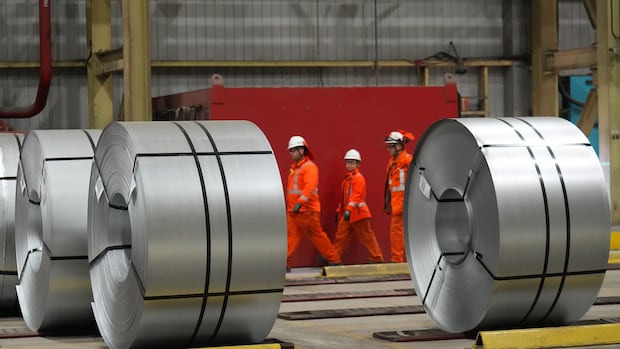
After Canada-U.S. trade talks broke down, U.S. President Donald Trump hits Canada with 50 percent tariffs. CBC’s David Common says this could result in the loss of thousands of Canadian jobs.
For instance, Alberta exports only a small fraction of the goods affected by the new tariffs, according to Tombe, yet could see around 9,000 jobs lost due to its industries that support exporters.
Past supports ‘largely useless’ for small firms
In addition to losing U.S. business, Kubek is concerned that Canada’s retaliatory tariffs — which Carney has pledged to enforce “dollar for dollar” against the U.S. starting after Labour Day — could exacerbate an already challenging situation.
Unless Ottawa’s got something really, really good lined up right away … just the short-term effects are going to be significant.Dan Kelly, Canadian Federation of Independent Business
Some of the glass, screw tops, and cardboard packaging that Kubek utilizes at the winery are sourced from the U.S., which raises concerns that Canadian-imposed tariffs could increase his production costs.
“If they implement the dollar-for-dollar tariff, it will make winemaking in Canada even more costly,” he warned.
However, given the government’s assurances to support businesses like his, Kubek hopes that efforts will be made to eliminate interprovincial trade barriers for alcohol.
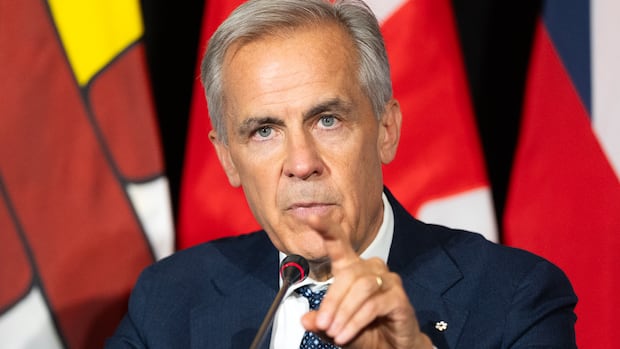
Prime Minister Mark Carney says Canada will retaliate ‘dollar for dollar’ after the Trump administration imposed crushing 50 percent tariffs on billions of dollars worth of Canadian goods just after midnight on Saturday.
Last month, nine provincial leaders pledged to initiate direct-to-consumer alcohol sales, which would facilitate brewers, distillers, and wineries in selling beyond their home provinces.
Kubek expressed that this is a positive development and plans to focus on selling directly to consumers in Ontario in the upcoming days to recuperate losses from the U.S. market.
However, he believes that regulatory changes allowing him better access to liquor store shelves in other provinces would significantly benefit his business, hoping that the provincial leaders might catalyze such changes.
“If I could sell in Ontario or Quebec … I wouldn’t need to rely on the U.S. market,” he stated.
For other small and medium enterprises, Dan Kelly, president of the Canadian Federation of Independent Business (CFIB), expressed hope that new support initiatives will be more effective than previous ones.

From beer to blazers to hockey gear, Canadian companies targeted by new 50 percent U.S. tariffs are digging in for an uphill battle as the stiff new levies threaten to make the American export market they rely on completely untenable.
Kelly pointed out that the criteria for previous assistance programs have largely excluded small businesses, rendering them “largely useless” to the entrepreneurs he represents.
Faced with such a significant hit from the 50 percent tariffs — with some business owners stating their companies would be effectively “finished” under these conditions — he hopes that the government will deliver timely support this time around.
“Unless Ottawa has something substantial ready to implement immediately … the short-term consequences will be considerable.”