

Teams are engaged in planting a multitude of trees across a sprawling national park in western Newfoundland to assist its forests in recovering from a moose population that was once among the largest in the world.
Darroch Whitaker, an ecosystems scientist with Parks Canada at Gros Morne National Park, stated that approximately 730,000 trees have been planted since 2023 in areas that were previously forested but have turned into grasslands due to the extensive grazing by moose.
He anticipates that the planting efforts will continue for another three years, aiming to reach a total of 1.25 million trees over an area of roughly four square kilometers.
However, the initiative goes beyond merely restoring forests lost to moose; it involves planting a diverse selection of trees that can endure higher temperatures, ultimately establishing resilient new forests capable of coping with climate change.
“The trees we plant today must endure for perhaps another century, and we are aware that the climate is shifting,” Whitaker mentioned during an interview outside a Parks Canada tree nursery and greenhouse in Rocky Harbour, N.L., situated in the heart of the park.
“Thus, we are also considering projected climate scenarios several decades into the future to ensure these trees are appropriate for those conditions.”
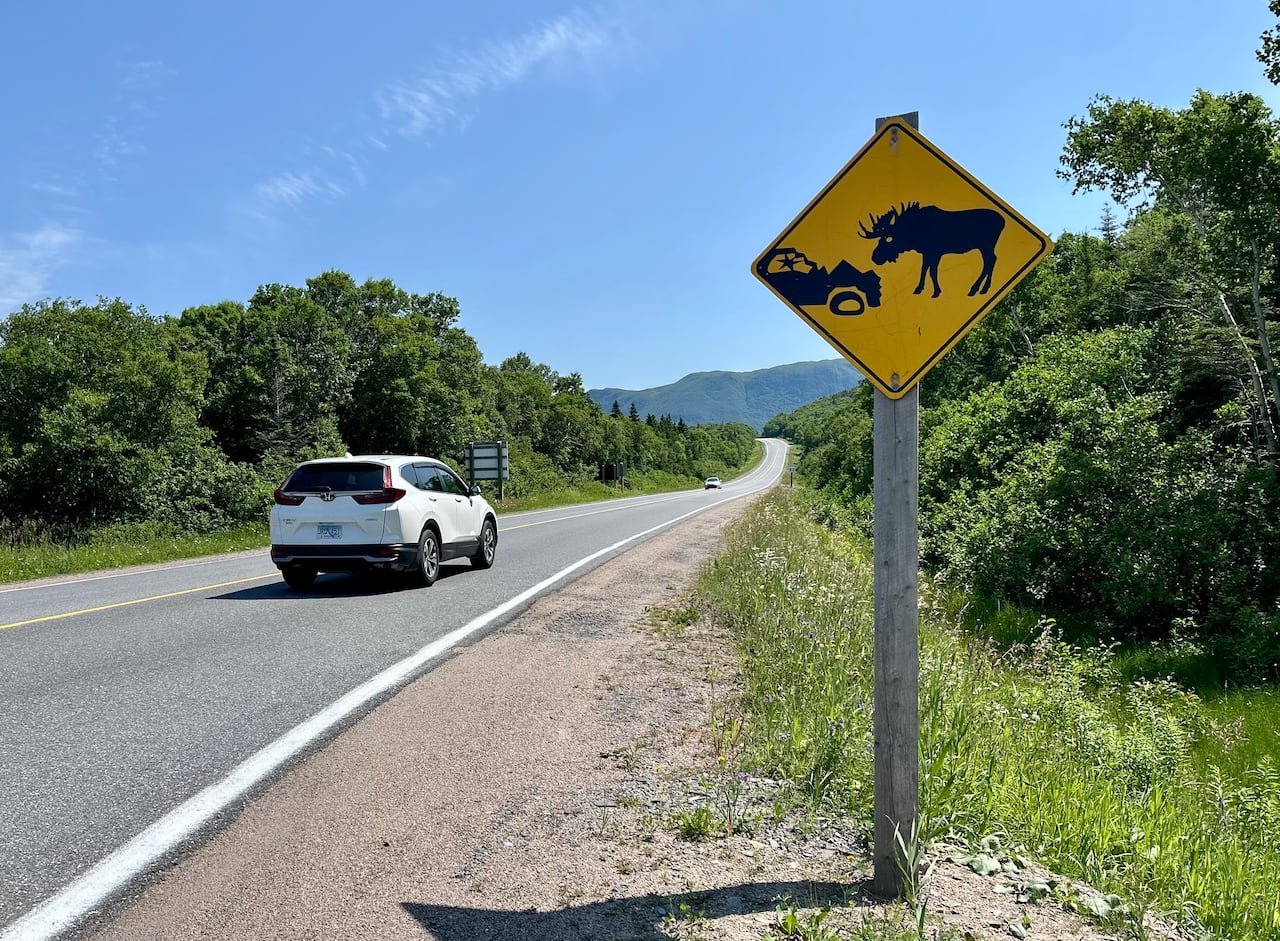
In the 1990s, the park’s moose population was around 6,500, which has since decreased to roughly 2,000. (The Canadian Press/Sarah Smellie)
Gros Morne is renowned for its majestic fiords and boreal forests interspersed with rivers and waterfalls. Established in 1973, the 1,805 square-kilometre park is the second-largest national park in Atlantic Canada.
While moose are widespread throughout Newfoundland, they became particularly numerous in Gros Morne, where a hunting prohibition previously protected them from humans, their only natural predator on the island.
In the 1990s, the population of moose in the park reached about 6,500, with some regions hosting six or more moose per square kilometre, according to Whitaker.
“We recorded some of the highest moose densities ever documented globally,” Whitaker noted. “Moose were nearly ubiquitous, and in areas where they weren’t hunted, they showed little fear of humans.”
They roamed along roads, walked through towns, and rested on hiking trails, being present everywhere, he remarked. Their substantial appetite for young trees posed a significant issue.
This feeding became problematic in areas where trees had already been decimated, potentially by beetles, as explained by Whitaker.
Typically, these regions would naturally regenerate, but the moose consumed all the new growth that could have developed into trees. Consequently, the park’s forests were dotted with bare patches, referred to as moose meadows.
In 2011, park officials permitted moose hunting, leading to a reduction in their population to a more manageable 2,000, according to Whitaker. By 2023, tree planters began their efforts to restore the forests by placing bags of two-year-old saplings into the moose meadows.
The saplings, which are around two years old at the time of planting, are largely cultivated at the Rocky Harbour tree nursery.
On a recent Thursday, the small building was filled with trays of young saplings. Outside, Whitaker and a colleague devoted much of their time examining the leaves of new red maples and other saplings for harmful pests.
Gros Morne features an abundance of black and white spruce as well as balsam fir. Whitaker and his team are introducing what he refers to as “boutique trees”—such as yellow birch, white pine, and wild cherry—that are primarily found in the southern parts of the park.
They are also utilizing seeds sourced from these southern areas, ensuring that the trees are pre-adapted to the warmer temperatures expected in the coming decades when they reach full maturity.
“A tree cannot migrate independently; it remains fixed where it germinates, where a seed lands,” he stated. “They cannot adapt at the same pace as the climate and may require assistance.”
Download our free CBC News app to receive push notifications for CBC Newfoundland and Labrador. Sign up for our daily headlines newsletter here. Click here to visit our landing page.