

U.S. President Donald Trump is advancing his efforts to tap into Venezuela’s vast oil reserves, revealing a new agreement designed to enhance production in the South American nation. While Trump is showcasing the potential controlling interest in a segment of Venezuela’s oil assets as a cautionary notice to Canada, analysts indicate that there is minimal cause for alarm in Western Canada.
An increase in Venezuelan oil shipments to U.S. Gulf Coast refineries could create a competitive challenge for Alberta’s oil sector, as both regions produce a comparable type of heavy oil.
Venezuela is home to some of the largest oil deposits globally; however, it encounters numerous obstacles in boosting production, alongside political turmoil that could hinder any aspirations to revitalize the nation’s oil industry.
At the same time, Canada’s oil sector continues to achieve new milestones in production, with several new and expanding pipeline initiatives at various development stages designed to increase export capacity. Despite the ongoing trade tensions, the U.S. continues to ramp up its consumption of Canadian oil, which constituted over 60 percent of its crude oil imports last year.
Experts suggest that a significant increase in Venezuelan oil exports remains five to ten years away, which is why the potential risk to Canada is not an immediate concern, as stated by Grant Sprague, a former deputy energy minister in Alberta.
“If the Americans want to pursue this, they are going to have to invest considerable time and a significant amount of money,” Sprague remarked about the agreement between the U.S. and Venezuela.
“One thing we do know is that we lack substantial information about it,” he added.
The new ‘deal’
On Friday, Trump took to social media to announce that his administration had secured a deal with Venezuela for majority control over one-fifth of its oil reserves. Under the terms of the agreement, the U.S. will acquire a direct equity interest in a private firm led by a Venezuelan entrepreneur.
Trump characterized the agreement as a significant boost to the U.S. oil supply and securing majority control of 65 billion barrels of oil reserves. In response, Venezuela’s acting president Delcy Rodríguez stated that the deal is expected to attract tens of billions in investment while preserving the country’s “ownership and sovereignty” over its natural resources.
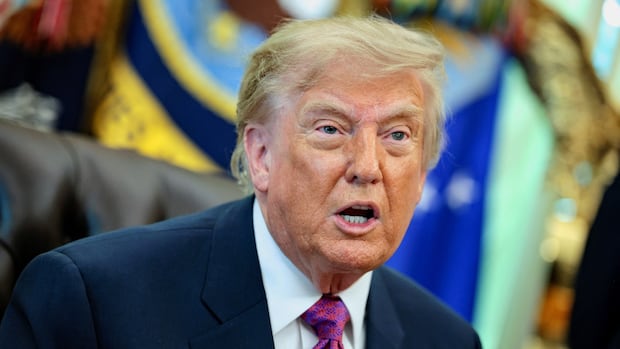
In a post on his Truth Social platform, U.S. President Donald Trump announced a deal that would allow the United States to control more than 65 billion barrels of Venezuelan oil.
These two statements are “quite different,” noted Al Salazar, an analyst based in Calgary with Enverus, an energy analytics firm.
“There’s some disparity regarding the situation. It raises questions,” he stated. “The specifics of the terms remain unknown.”
This uncertainty is one reason Canadian oil executives are paying attention to the agreement, yet they are not overly concerned. They prefer to observe whether any tangible advancements occur in revitalizing the struggling Venezuelan industry.
“Prove the barrel exists before any action is taken,” he remarked regarding the sentiment in the Canadian sector.
The Trump administration has been urging U.S. oil and gas leaders to invest in Venezuela’s energy sector following a military action that saw the U.S. capture former president Nicolás Maduro in January.
Oilsands decades ahead
Most of Canada’s heavy oil originates from the oilsands in Northern Alberta, where extraction sites produce millions of barrels daily and have become one of the most cost-effective oil sources in North America.
A significant advantage of the oilsands is that the multi-billion dollar facilities are constructed, fully paid for, and are continually upgraded, according to Alex Filstein, a technology developer and reservoir engineer in the oilsands.
“We don’t need to invest further in infrastructure. We simply manufacture that oil and operate those facilities. We enjoy political stability and have a very low supply cost in Canada,” said Filstein, who serves as the chief technology officer at Watercut Inc.
This stands in stark contrast to Venezuela, which reached a peak output of 3.7 million barrels per day in 1970.
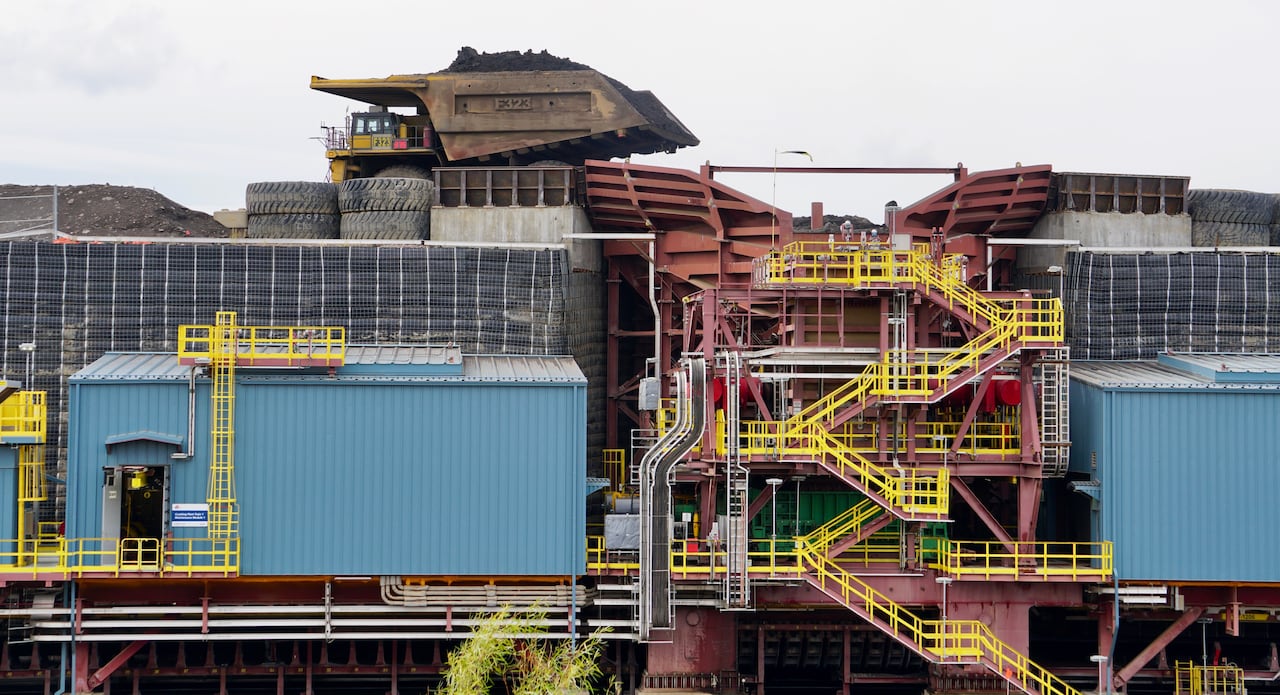
Suncor’s Fort Hills oilsands mine cost about $17 billion to construct and began operating in 2018. (Kyle Bakx/CBC)
Last year, the country only extracted around 900,000 barrels per day, following years of decreased investment due to sanctions and ineffective government policies.
Not only is the oil sector’s infrastructure in various stages of deterioration and neglect, but experts also indicate that it is unclear how much funding will be needed for repairs, let alone for developing new infrastructure.
“The integrity of these facilities is largely unknown,” stated Filstein, who views the vague information and uncertainty in Venezuela as significant barriers for major U.S. energy firms that may hesitate to invest there. These companies might prefer to allocate their resources to other ventures globally.
“Firms require stability and clarity on how investments are managed,” Filstein added.
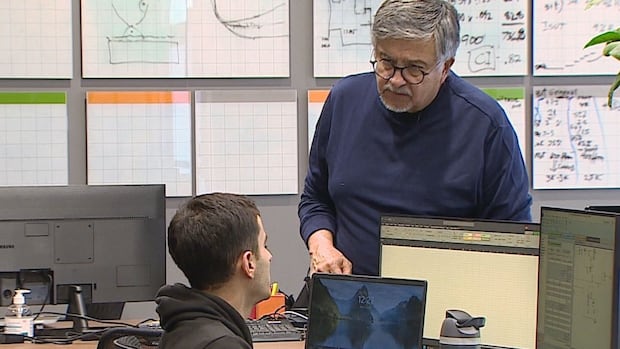
U.S. President Donald Trump wants to control Venezuela’s energy industry and its vast oil reserves. As CBC’s Kyle Bakx reports, that’s being met in Alberta with both excitement and hesitation from businesses and energy workers.
Political hurdles
In addition to practical challenges, there is significant political instability as well.
Should Venezuela’s oil sector make a comeback, by that time, both the U.S. and Venezuela may have new leadership and potentially different governments.
“A key question remains whether a future government in Venezuela would uphold this agreement if the country returns to democracy. Thus, for companies contemplating investment, there are considerable financial and political risks involved,” explained Colin Mang, an economics professor at McMaster University in Hamilton.
“It’s uncertain whether American oil firms will invest as much as the Trump administration anticipates,” he added.
In previous decades, foreign entities have had their assets in Venezuela confiscated, with ExxonMobil experiencing this twice.
Up to now, several companies, such as Shell and Repsol, have shown interest in potential new investments in Venezuela’s oil and gas sector. Chevron, which already operates in the country, is considering an expansion of its operations.
The possibility of increased heavy oil imports into the U.S. should not alarm Canada, remarked Sprague, the former Alberta deputy energy minister.
He highlights that global oil demand remains on the rise, and Canada is enhancing its exports to foreign markets, including China and India, from its West Coast.
The Trans Mountain pipeline system, which transports oil from Edmonton to the Vancouver region, is operating at full capacity, with an initial expansion projected for completion by the end of this year.
Additionally, the Alberta government is collaborating with the federal government to initiate a new pipeline project along a similar path. A decision from the federal government is anticipated by October 1 on whether to classify the proposal as a “project of national interest” under the Building Canada Act.
“The United States seeks a variety of sources. That’s acceptable. We also aim for diverse markets,” Sprague concluded.