

On a video conference held Thursday, Canada’s ambassador to the U.S. stated that reinstating American alcohol products on Canadian grocery shelves is an essential condition for finalizing a trade agreement with the U.S. to prevent new tariffs, according to CBC News.
Mark Wiseman shared this insight during a significant briefing regarding the potential trade pact for approximately 100 members of the Canada-U.S. trade council.
The trade council, which consists of businesses, industry associations, and labor groups, also received input from a former chief trade negotiator for Canada, who expressed skepticism about the proposed deal.
Currently, Canada’s negotiating team is in Washington, engaged in crucial discussions with the Trump administration to avert a 50 percent tariff on billions of dollars worth of Canadian exports. The deadline for reaching an agreement is midnight Friday.
During his roughly 30-minute address, Wiseman outlined a preliminary agreement aimed at circumventing the new tariffs, as reported by three sources who participated in the call. CBC News has chosen not to identify these sources, as they were not authorized to speak publicly regarding the conversation.
-
Premiers back Carney as trade war with U.S. escalates
-
One of Trump’s top deputies has been unsatisfied with trade deal on the table for Canada, sources say
-
Canadian bans on U.S. alcohol take centre stage in tariff talks. American businesses are caught in the middle
Wiseman indicated that around 35 Canadian officials are stationed at the Canadian Embassy in Washington, working on finalizing the wording of a potential agreement. During the Thursday morning call, Wiseman noted that officials aimed to complete this task within the next 24 to 48 hours, according to sources.
He mentioned that the prospective agreement would entail reducing tariffs on steel, aluminum, and automobiles, as well as revising the government’s allocation of dairy import licenses. The dairy sector has cautioned that this could result in an increased presence of American dairy products on Canadian store shelves.
After Wiseman concluded his remarks, one of the council’s advisors — former chief trade negotiator Steve Verheul — cautioned about the drawbacks of the proposed deal, as multiple sources reported.
Verheul previously guided Canada through challenging negotiations with the U.S. that culminated in the establishment of the Canada-U.S.-Mexico Agreement and also participated in the earlier NAFTA discussions.
He voiced concerns to the council that while the current Section 338 tariffs from Trump pose an immediate danger, Canada might be sacrificing a long-term advantage with the potential agreement. Sources indicated he proposed that agreeing to sectoral tariffs and making such concessions could present significant issues.
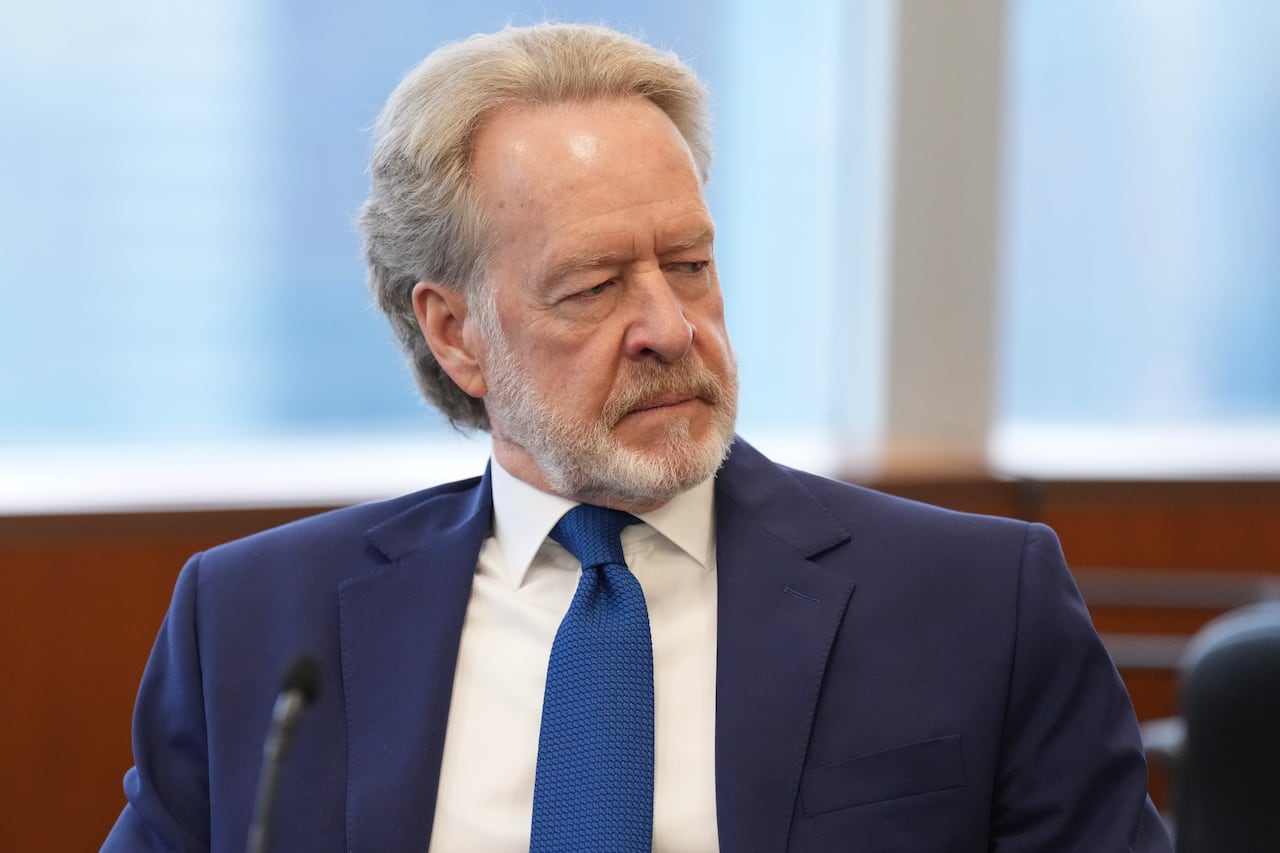
Steve Verheul, Canada’s former chief trade negotiator, attends a Canada-U.S. relations meeting at the Ontario Investment and Trade Centre in Toronto on Jan. 31, 2025. (Chris Young/The Canadian Press)
According to CBC News, the anticipated agreement would see the U.S. reduce tariffs on steel and aluminum from 50 percent to 25 percent.
The pact is also expected to decrease the tariff rate imposed by Trump on Canadian-manufactured vehicles from 25 percent to 15 percent, with an exception for American-made content, a source revealed.
Participants on the Canada-U.S. trade council’s call reacted to Wiseman’s announcement that the auto industry was not receiving the concessions it desired.
The Canadian automotive sector had been advocating for an exemption for Canadian-made content from U.S. tariffs but learned from Wiseman during the call that the U.S. would not concede, and the issue would instead be postponed for CUSMA negotiations, sources stated.
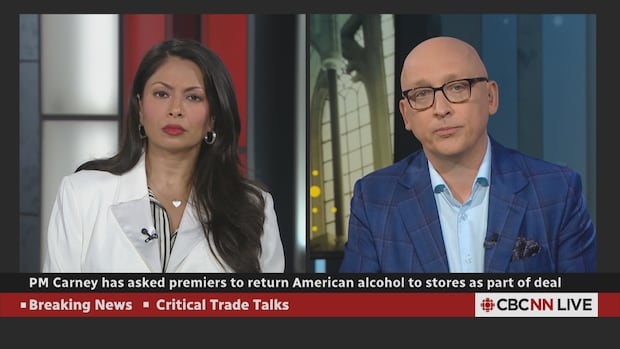
With new 50 percent tariffs set to take effect just after midnight, Canadian negotiators are once again in Washington to finalize a deal. David Cochrane, host of CBC’s Power & Politics, joins CBC News Network to break down the state of trade talks as the deadline approaches.
Verheul’s warning to the council was that if Canada proceeds in this direction, it will relinquish much of its current leverage before entering the CUSMA review, potentially leading to further demands from the Americans, according to sources.
He noted that generally, Americans do not support Trump’s tariffs, and the U.S. industry largely favors the continuation of CUSMA, which includes duty-free trade, sources stated.
Verheul articulated to the council that Canada is contemplating making considerable concessions while the U.S. industry still has the capacity to influence the Trump administration.
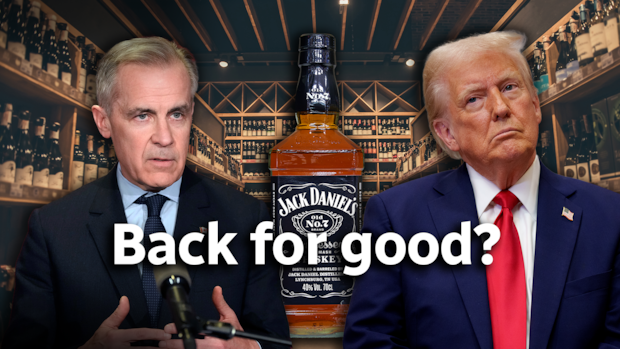
Trade talks between Canada and the U.S. have hit a breaking point over alcohol, with Prime Minister Mark Carney urging premiers to put American liquor back on shelves. Andrew Chang explains how alcohol became a top bargaining chip, how provincial liquor boards complicate trade and what’s driving the current tariff standoff.
(Photo credits: The Canadian Press, Reuters and Getty Images)
Verheul emphasized the necessity for Canada to clearly assert at this moment that it does not recognize the Trump administration’s sectoral tariffs on aluminum, steel, and automobiles as valid.
He further stated that achieving duty-free trade should remain a priority for Canada in the upcoming CUSMA review, and this stance must be communicated if Canada plans to make such concessions.
Additionally, he remarked that the Canadian government is not sufficiently consulting with the relevant industries, and that the premiers had not been provided with significant data, according to sources.
Industry representatives informed CBC News that, unlike previous negotiations, they have been kept uninformed while the U.S. industry receives much more detailed briefings from the Trump administration. Sources indicated that council members expressed their dissatisfaction during the call.
Another advisor on the council, former finance minister and deputy prime minister Chrystia Freeland, also participated in the call, as per sources. Freeland previously led Canada’s negotiations with the Trump administration to transform NAFTA into CUSMA.
During the council’s discussion, Freeland raised concerns and suggested that if Canada proceeds with agreeing to tariffs, it would be challenging to eliminate them, even if there is a change in administration in Washington.