

With less than five months to go, libraries throughout Alberta are approaching a deadline to adhere to new limitations concerning their collections.
However, due to a heavy workload and increasing costs that may be necessary for compliance, numerous librarians still have unanswered questions regarding the implementation of these regulations.
The new limitations stem from Bill 28, which mandates public libraries in Alberta to restrict access to materials such as books, graphic novels, magazines, films, TV shows, and video games that depict sexual acts visually. According to these regulations, no individual aged 15 or younger can use or borrow the newly restricted items without the consent of a parent or guardian.
Libraries must identify which items to restrict, where to store them, and how to control access by Jan. 1.
Lesley Moody, who manages the Olds Municipal Library, indicated that some supporters of the bill do not fully grasp the complexity involved in this process, which extends beyond merely removing a few titles from the shelves.
Her library houses approximately 1,500 graphic novels that need to be reviewed. In some cases, novels with hundreds of illustrated panels require staff to carefully search for a few drawings that may necessitate the restriction of the entire book.
“Since no specific list has been provided by the provincial government, we must meticulously examine every book in our graphic novel collection,” Moody explained.
She estimates that her team will require around 600 hours of labor, amounting to about $15,000, just to assess the graphic novels they hold.

The Coalition of Alberta Public Libraries is opposing Bill 28, citing significant worries regarding privacy, local autonomy, and the future of library services.
The financial burden on her library continues to grow as they assess DVDs, video games, and other books containing images, purchase new shelving for the restricted materials, and establish new workflows and policies concerning library cards for children and parental permissions.
Moody expressed confidence that her staff is adequately sized to review the collection without the need to temporarily close to the public, although smaller libraries might be forced to take that measure.
“If you have only one or two staff members in a library and face a January 1 deadline, the only viable option may be to fully close the library while you comply, which is a heartbreaking thought for many communities that rely on their public library,” Moody stated.
Libraries Awaiting New Guidelines
The province has indicated that it intends to issue guidelines this month to assist libraries in modifying or creating new policies in response to Bill 28, which Ron Sheppard, director of the Parkland Regional Library System, is eager to see.
Sheppard wants clarity on whether the restrictions will extend to educational materials or history books that contain illustrations of Greek vases or ancient temples featuring explicit imagery.
He also inquired if libraries could utilize rating systems for films and video games instead of requiring librarians to examine entire collections.

Banned books have become a contentious issue in Alberta lately. This spring, the provincial government introduced legislation to prevent children and young teenagers from accessing sexually explicit images in public libraries. The government has stressed that they are not banning books but are merely establishing safeguards for children and families. However, what implications arise at public libraries when access to certain books is restricted? Toni Samek is a professor emeritus at the University of Alberta.
“There exists a legal definition of pornography, and to my knowledge, nothing in any Alberta library fits that legal definition,” Sheppard, who is also part of the Coalition of Alberta Public Libraries’ steering committee, remarked.
“Thus, it becomes a matter of subjectivity.”
Sheppard noted that some libraries with limited space are contemplating storing all restricted materials in off-site warehouses or at regional library headquarters like Parkland’s.
He also raised questions regarding access to online resources. Boards are expected to impose the same restrictions on e-books and audiobooks, but Sheppard pointed out that these are often borrowed through third-party vendors, such as Libby, which operate in other countries.
Limiting Access
Jack Alarie, press secretary for Alberta’s Municipal Affairs ministry, stated that Bill 28 aims solely to prevent children from encountering explicit images in public libraries.
“We are discussing access controls, not censorship, and no library will be instructed to remove anything from its collection,” Alarie mentioned in an email.
According to Ken Feser, chief librarian at the Medicine Hat Public Library, libraries have already employed professional standards for years to curate their collections and classify materials based on age appropriateness, in addition to establishing processes for addressing public complaints.
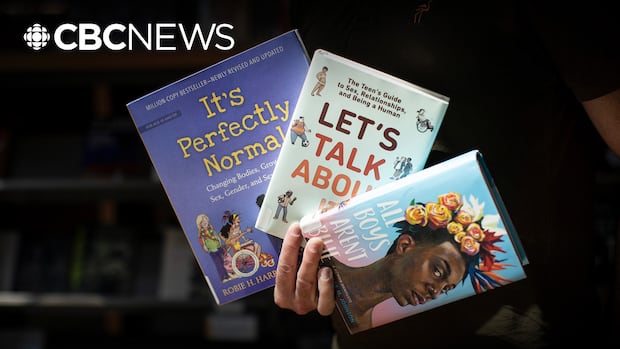
According to Alberta’s municipal affairs minister, new regulations will require public libraries to relocate any materials containing graphic sexual content so that children and young teens cannot access them.
Feser expressed concern that the new regulations would render some materials less accessible to the public, essentially causing them to disappear.
“Hiding a book is nearly as effective as destroying it, and they are essentially asking us to hide these books,” Feser stated.
“They must be removed from public shelves, relocated to a back corner or a locked storage area where they cannot be seen.”
He further expressed worry that some libraries might eventually opt not to carry certain books if they provoke too many complaints, or that a stigma could develop around borrowing restricted books, akin to how movies were once concealed behind beaded curtains in old video rental stores.
Feser remarked that the new restrictions depict libraries as adversaries after years of collaborative efforts with the province.
“This is a sudden shift that has nothing to do with any actions taken by the libraries,” Feser noted.
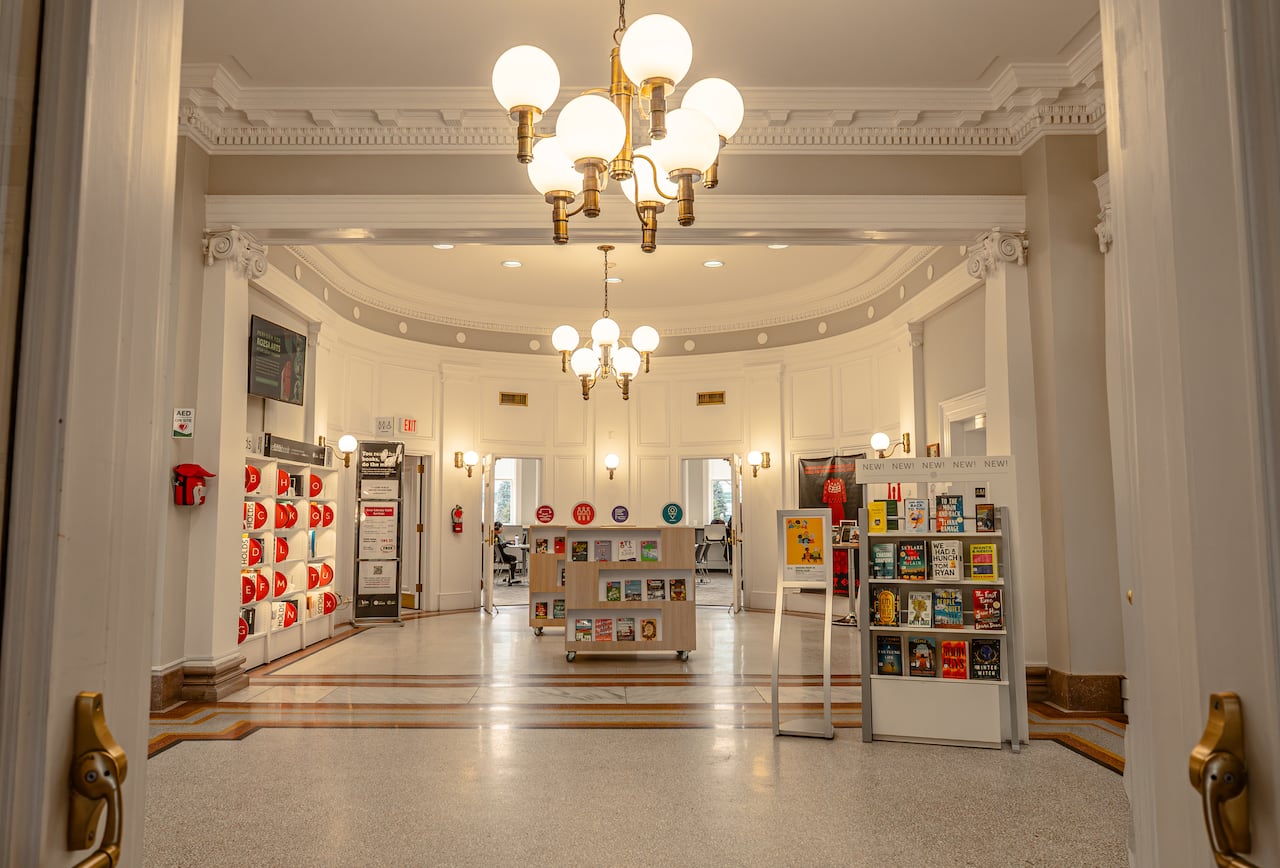
Staff members at the Calgary Public Library’s Memorial Park branch must, as per the Libraries Act, ensure that individuals under 16 cannot access library materials with sexually explicit content starting January 1. (Zazak Bouarab/Radio-Canada)
Sarah Meilleur, CEO of the Calgary Public Library, mentioned that she cannot predict how the new limitations may influence their operations, but her team plans to keep the public informed as more details become available.
The provincial government’s decision aligns with a similar directive for school libraries. The interest group Action4Canada expressed satisfaction with the ruling, and its founder, Tanya Gaw, recently voiced her support for the new restrictions outlined in Bill 28.
“Action4Canada prioritizes protecting children’s innocence. They must not be exposed to pornographic and sexually explicit materials in schools, school libraries, or publicly funded libraries. Period,” Gaw stated in an email.
Increased Inspections
Bill 28 also extends the authority of inspectors to examine any issues related to a library’s management, administration, or operations. However, Sheppard noted that the specifics of the inspection process remain unclear.
“This uncertainty is causing considerable concern among library managers, as they are unsure what might trigger an inspection,” Sheppard explained.
“They may not even be informed that a complaint has been filed until an inspector arrives. Additionally, they are uncertain about what actions they will be compelled to take.”
Alarie remarked that the inspections are consistent with existing municipal regulations, stating that the province anticipates they would occur infrequently, focusing on “resolving issues rather than punishment.”
Kelsey Chic, library manager for the Carmangay and District Municipal Library, contended that the inspection process risks diminishing local decision-making authority, as staff have historically curated collections tailored to their specific communities.
“It’s local individuals making decisions for local people. I don’t require someone in Edmonton to dictate what the residents of Carmangay need,” Chic asserted.
Carmangay is a small village with a population of just under 300, located approximately 122 kilometers southeast of Calgary.
Throughout the summer, Chic has shared videos on social media to inform her community about her criticisms of Bill 28 and the potential changes to library operations. She aims to clarify that the issue is not as straightforward as some may assume.
“People say, ‘Well, we don’t want children reading porn.’ No one does,” Chic emphasized. “We do not have porn in libraries, I assure you. Hustler is not next to our HGTV magazine.”
According to James Turk, director at the Centre for Free Expression at Toronto Metropolitan University, data from his organization reveals that there have been only 85 challenges to books for children and young adults in Alberta libraries over the past decade, indicating little justification for implementing new restrictions.
Turk proposed that libraries should mount a constitutional challenge against the restrictions, claiming they infringe on the freedom of expression rights of young library patrons.
Regardless of whether Alberta’s libraries choose to resist, Turk noted that librarians across Canada are observing the situation closely to gauge the repercussions of Alberta’s restrictions.
“If this is successful in Alberta, libraries throughout the country fear a significant push, similar to what occurred in Alberta, to enact similar legislation,” Turk warned.