

On Thursday, jurors were presented with an audio recording from a 2008 police interview where Duane (Keffe D) Davis informed detectives that his nephew, Orlando (Baby Lane) Anderson, was the one who shot and killed rapper Tupac Shakur.
In the Los Angeles police interview, Davis claimed he was in the vehicle with Anderson and is currently charged with orchestrating the 1996 murder of the 25-year-old hip-hop icon in Las Vegas.
At the time of the interview, Anderson had already been deceased for ten years.
Davis recounted that the white Cadillac they were in, accompanied by two other men, came alongside a vehicle containing Shakur and hip-hop mogul Marion (Suge) Knight.
“If we would have been on my side, I would have blasted,” Davis stated in the audio played for jurors on Thursday.
However, since Knight’s car was on the opposite side, Davis said he passed his firearm to Deandre “Big Dre” Smith, who refused to take it.
Anderson, sitting in the back seat, then took the gun and began firing, according to Davis.
As jurors watched the transcript of the audio recording, some took notes intermittently. During the playback, Davis and his attorney conversed quietly in the courtroom. Shakur’s family remained silent, occasionally glancing at the screen or looking down. The atmosphere was somber as the audio detailed Davis’s account of the incident.
-
Former gang leader directed Tupac’s drive-by killing, prosecutor tells jury
-
Man charged with arranging Tupac Shakur’s murder heads to trial 30 years after hip-hop legend’s death
This marked the first occasion Davis openly discussed his role in the murder with law enforcement. The interview serves as crucial evidence in the prosecution’s case against the 63-year-old Davis. Prosecutors indicated in their opening statements that they would heavily rely on Davis’s admissions made during police interviews, podcast appearances, and his co-authored 2019 memoir, Compton Street Legend.
He had previously informed the FBI that his nephew was not involved in Shakur’s 1996 shooting and suggested that either Knight or Sean (Diddy) Combs might have had a hand in it.
Client ‘full of crap,’ attorney claims
Davis has entered a not guilty plea. His attorney described the prosecution’s narrative as “fiction” and asserted that Davis was “full of crap” for his accounts of involvement, claiming authorities were aware of this. He contended that investigators lacked the evidence to corroborate Davis’s statements.
The detectives from Los Angeles had initially brought Davis in to discuss the 1997 murder of Shakur’s rival, the Notorious B.I.G.
Davis had been a brief suspect in that unresolved case but was later eliminated from suspicion.
“Everyone was a suspect back then,” Daryn Dupree, one of the detectives involved in the interview, testified in court on Thursday.
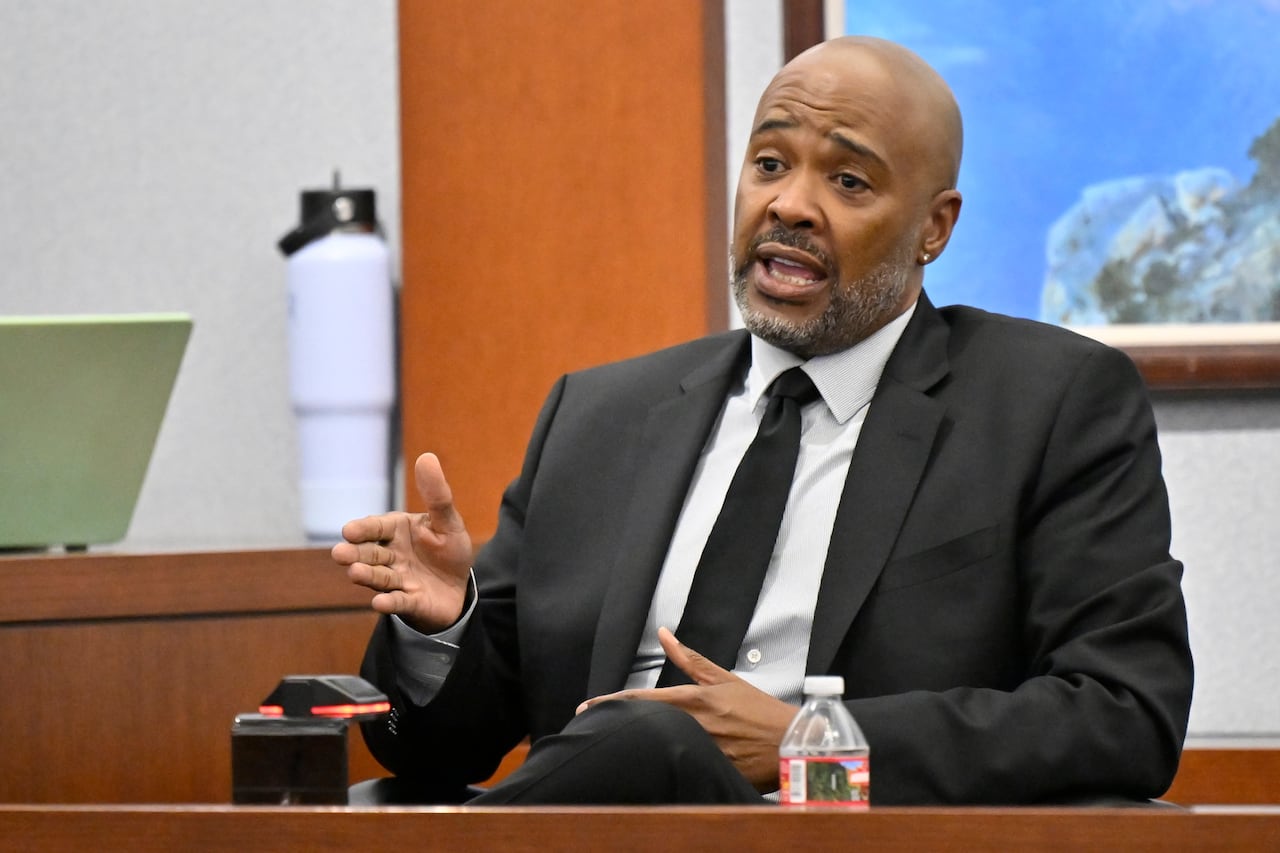
Former Los Angeles Police Department detective Daryn Dupree testifies during the Duane Davis murder trial on Wednesday. (David Becker/Pool AFP/The Associated Press)
In the audio recording presented in court, detectives were heard assuring Davis that their conversation was confidential.
“Nothing you say today can be used against you,” stated Greg Kading, the other detective who conducted the interview, which he later recounted in a book.
Some audience members shook their heads when a voice on the audio claimed that “nothing leaves this room.”
Dupree could be heard saying, “If you don’t say anything, that’s fine, but if you go out there and start talking…”
Prosecutors assert confidentiality no longer applies
Prosecutors argue that Davis did indeed “go out there and start talking” a decade later by sharing stories about the shooting in various interviews and his memoir. They contend that this invalidates any prior agreement he had with law enforcement regarding this and other recorded discussions.
The prosecution claims that Shakur was murdered as retaliation for an earlier attack on Davis’s nephew Anderson by Shakur’s entourage at the MGM Grand following a Mike Tyson fight. Davis attended the fight but was not present during the altercation.
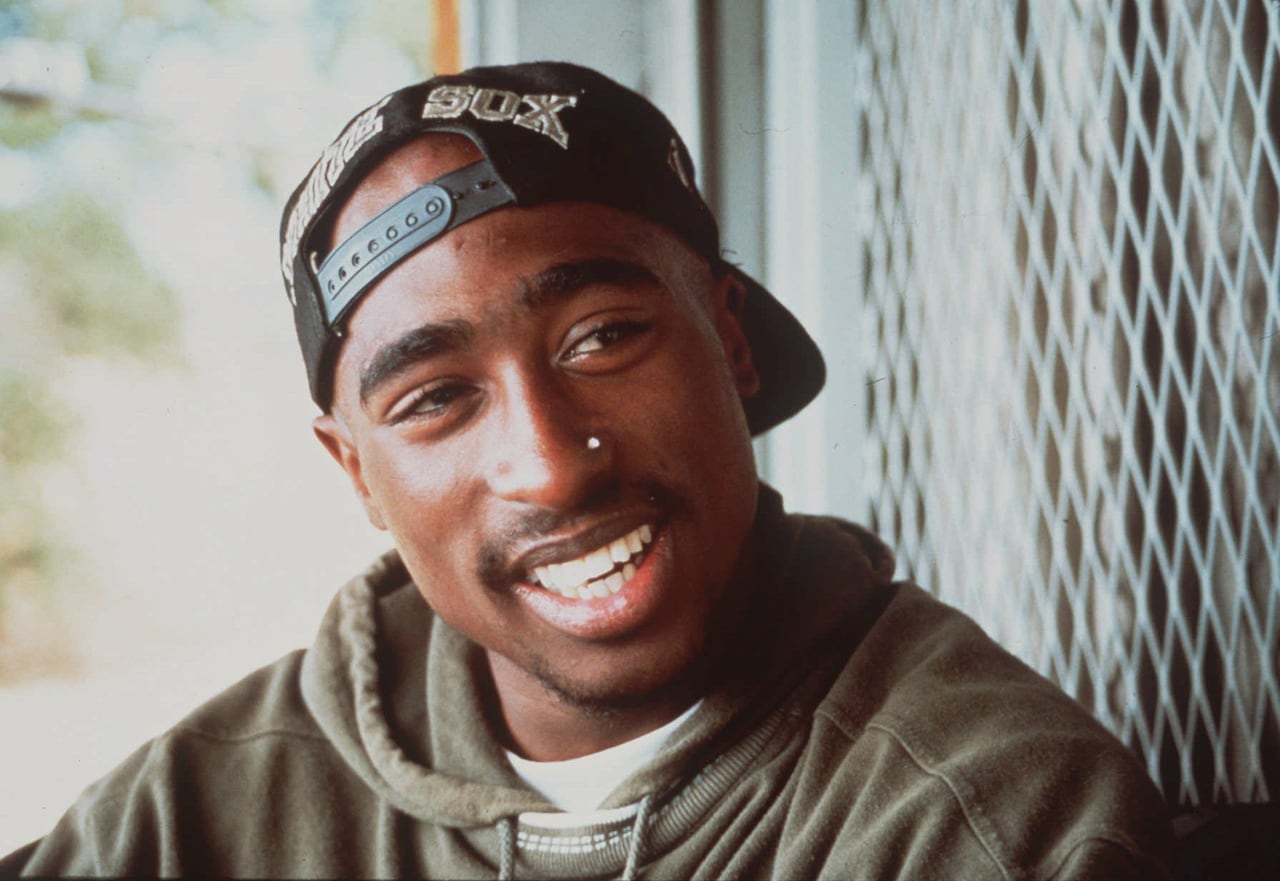
Rap musician Tupac Shakur, shown in 1993, died on Sept. 13, 1996, due to a drive-by shooting. Even decades after his passing, Shakur remains a cultural icon and one of the most influential and versatile rappers ever. (The Associated Press)
Later that evening, while in the Cadillac, they spotted Shakur leaning out of a black BMW as people called out “Tupac!” according to Davis’s account in Compton Street Legend.
Davis informed the detectives that after Anderson fired the shots, he believed Knight was dead.
Despite his death, Shakur continues to be regarded as a cultural icon and one of the most impactful and versatile rappers in history. He passed away at the height of his fame and as his acting career was flourishing. His legacy has only intensified in the years that followed.