

A small wild feline residing in the cloud forests of Bolivia has been recognized as a previously unidentified species, signifying the first formal naming and description of a new cat species in over a century.
Locally known as Tilcayo, this cat belongs to a category referred to as tiger cats, which are distributed throughout much of South America.
Discovered in the verdant Yungas forest of Bolivia, an area characterized by mountainous terrain, frequent cloud cover, and high humidity, the cat is approximately 46 centimeters (18 inches) long and weighs around three pounds, making it smaller than the typical house cat.
Scientists utilized genetic evidence to validate that this cat is indeed a new species, assigning it the scientific name Leopardus tilcayo, while retaining its local designation.
“Its coat is light brown with irregularly shaped rosettes scattered across its body,” stated Paola Nogales Ascarrunz, a National Geographic explorer and one of the study’s authors, which was published on Thursday in the journal Current Biology.
Currently, little is known about the cat’s biology and behavior. Analysis of scat samples containing remains of small rodents indicates they may be part of its diet, while camera trap footage suggests it might be more nocturnal, according to Nogales Ascarrunz.
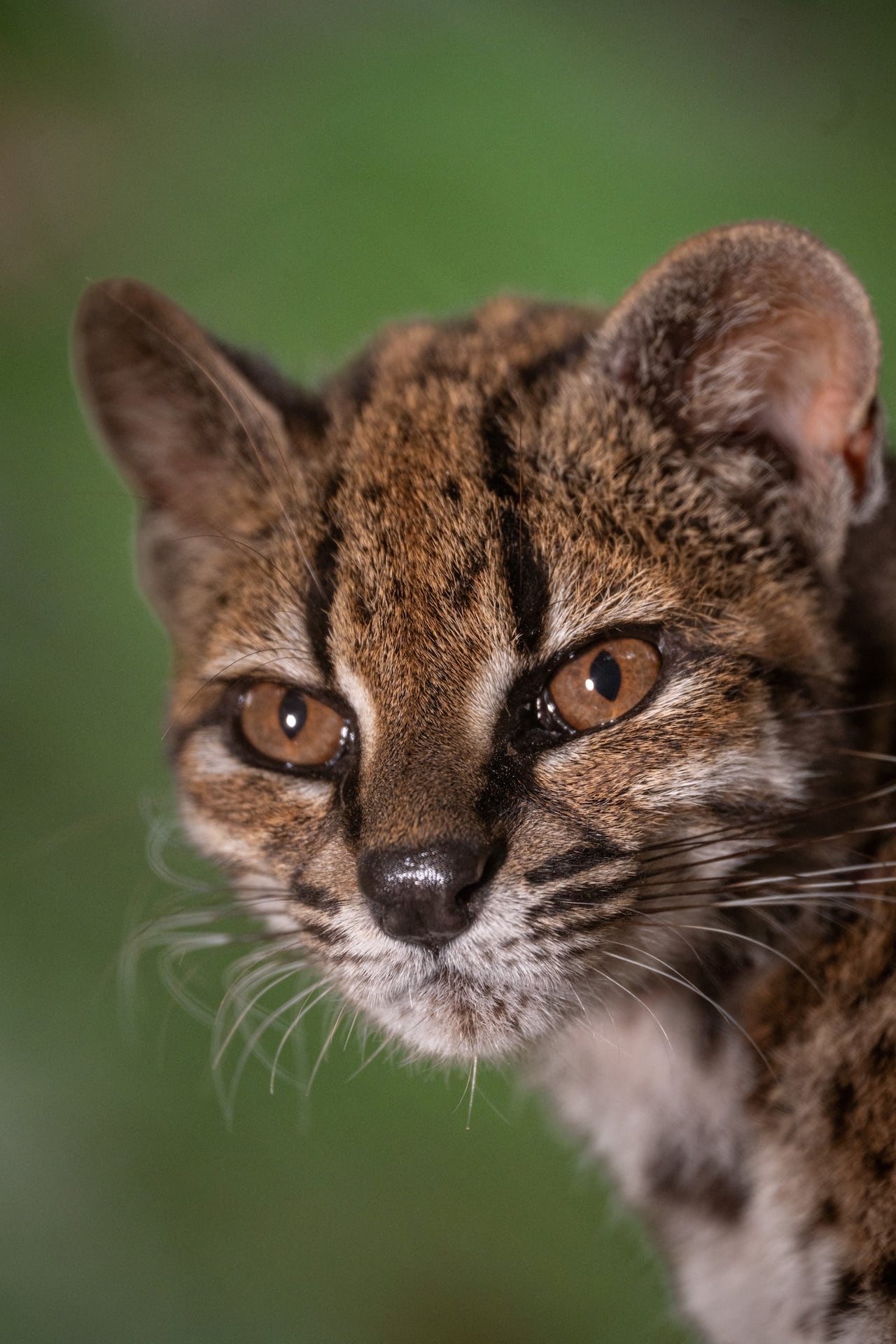
A close-up of a Leopardus tilcayo cat, the only known individual of the newly identified species living in protective captivity. (Fernando Faciole/National Geographic via Reuters)
Tiger cats are classified as cryptic species, meaning they are not easily distinguishable by their appearance alone, explained evolutionary biologist and study co-lead author Jonas Lescroart from the University of Antwerp in Belgium.
Previously, tiger cats were thought to be a single species, but genetic research conducted decades ago indicated the presence of several distinct species.
Only 2 live individuals found so far
Regarding the newly discovered species, Lescroart remarked, “At this stage, our knowledge is limited to the two living individuals we studied, along with a small number of camera trap recordings.”
One of the living tigers is a 10-year-old male currently residing in the Senda Verde Wildlife Sanctuary, after being kept by a local family.
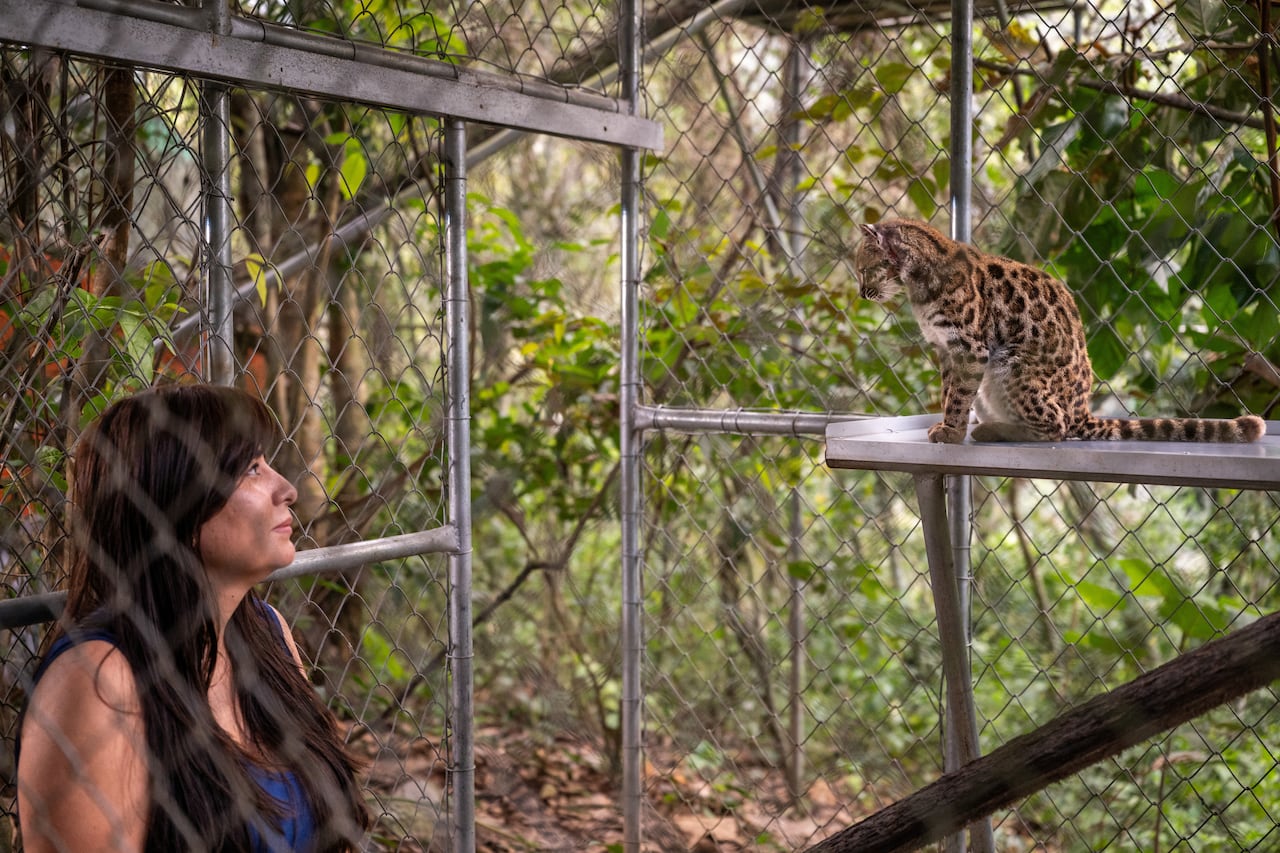
Nogales Ascarrunz observes the cat at the Senda Verde animal refuge in Bolivia on Sept. 1. (Fernando Faciole/National Geographic via Reuters)
The examination of the Bolivian cat garnered attention because “its traits did not align with descriptions, most of which were based on Brazilian cats,” said Nogales Ascarrunz. “This led us to question: What type of tiger cat is actually present in Bolivia?”
The research team scrutinized DNA from 38 cats across several South American nations, including eight specimens from museums. Their findings revealed that tiger cats are actually comprised of five genetically distinct species.
“We were surprised to find that this Bolivian tiger cat was a separate species, and no one had previously suggested it as a distinct animal — be it subspecies or otherwise,” Lescroart remarked.
Genetic analyses indicated that the Tilcayo lineage diverged from other tiger cats approximately 1.4 million years ago.
“The greater the differences in their DNA, the longer we estimate those lineages have been physically isolated,” Lescroart explained, noting that such a divide is generally recognized as a species-level distinction among cats.
The research team also identified a new subspecies of tiger cat in Peru’s Yungas, naming it Leopardus tigrinus antisuyo in honor of Antisuyu, the region of the former Inca Empire where it resides.
New species may be listed as endangered
The International Union for Conservation of Nature (IUCN) currently classifies tiger cats as two “vulnerable” species experiencing declining populations.
The researchers have communicated their findings to the IUCN, whose upcoming evaluation will consider the five lineages separately. This could offer a clearer understanding of their conservation status, with species like the Tilcayo potentially being categorized as endangered based on individual assessments.

Scientists are discovering species more quickly than ever before. CBC Kids News contributor Manny Brennan shares some of the cool species discovered in 2025.
The urgency for a more precise evaluation is particularly critical in the Yungas, which is among the most endangered ecosystems in the region.
The mountain forests are increasingly threatened by deforestation, agricultural encroachment, human-induced fires, and mining activities, according to Nogales Ascarrunz. It is imperative to restore forest areas affected by fires, safeguard remaining native forests, and maintain connectivity between habitats, she added.
“Demonstrating to the public that even within a prominent group like cats, new species are still being discovered may convey a significant message,” noted Eduardo Eizirik, an evolutionary biologist at the Pontifical Catholic University of Rio Grande do Sul in Brazil and senior author of the study.
“Countless undiscovered species still exist in the world, and they are at risk of vanishing before we have a chance to find them.”