

WARNING: This article includes accounts of violence against Indigenous women, along with mentions of racist attitudes and actions. Resources are available at the conclusion of this article.
Brayden Bushby, the individual found guilty of manslaughter in the 2017 death of Barbara Kentner in Thunder Bay, Ontario, has received full parole with certain stipulations.
The Parole Board of Canada (PBC) reached this decision about Bushby, who was sentenced to eight years in prison five years ago, on Thursday, as indicated in documents disclosed to CBC News on Tuesday.
“The board evaluated all pertinent information available, including documentation from the file, details about the victim, recommendations from the Correctional Service of Canada, and the verbal presentation made during the panel hearing,” the documents state.
The board determined that granting Bushby full parole would not result in “undue risk” and would “aid in the protection of society” by enabling his reintegration “as a law-abiding member of the community.”
Kentner, who was 34 years old at the time of her death, succumbed to medical issues following an incident in which a trailer hitch was thrown at her from a moving vehicle. She was affiliated with the Wabigoon Lake Ojibway Nation and is cherished by her family as a devoted mother, sister, cousin, and aunt.
Bushby was sentenced in June 2021. After accounting for time served, his prison sentence was adjusted to seven years and 11 months. The now 27-year-old is a father to two children.
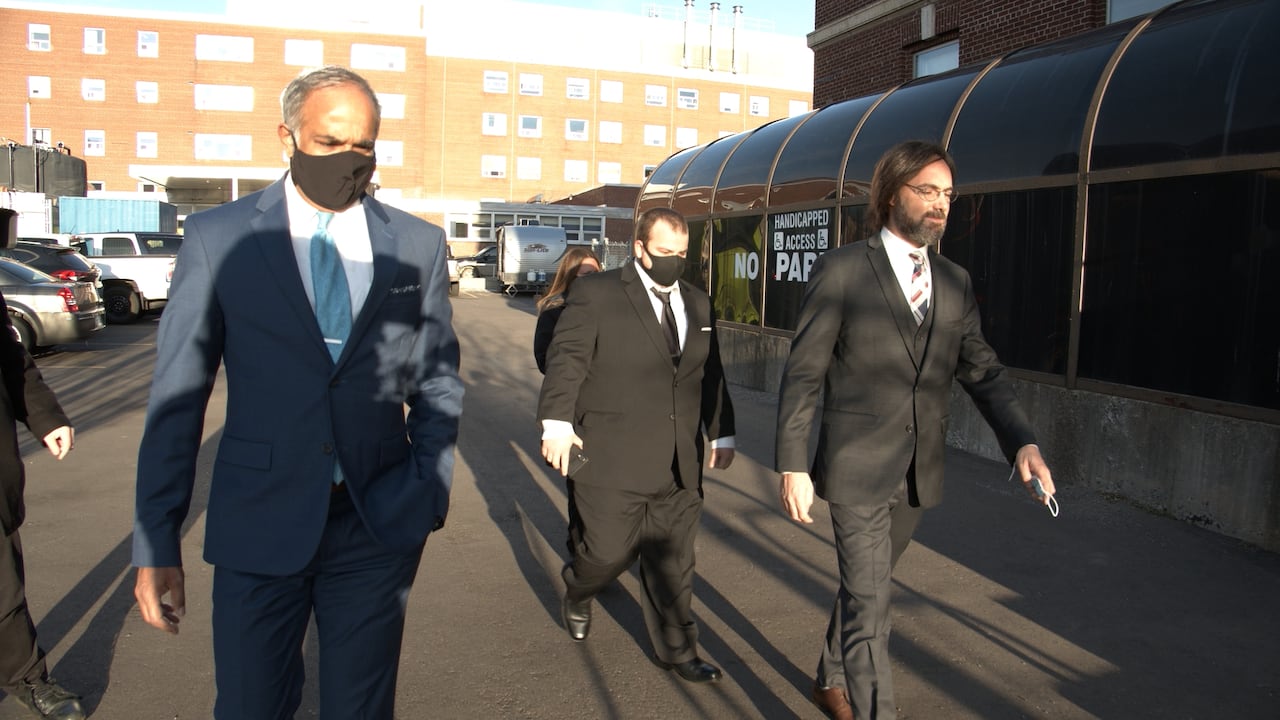
Brayden Bushby, center, arrives at court in Thunder Bay accompanied by his legal team, George Joseph, left, and Ryan Green in 2020. (Marc Doucette/CBC)
CBC News has contacted Kentner’s family and the Wabigoon Lake Ojibway Nation (WLON) for their feedback.
“The Wabigoon Lake Ojibway Nation expresses its solidarity with Barbara Kentner’s family, a member of WLON, in conveying deep anger and disbelief regarding the Parole Board of Canada’s choice to grant full parole to Brayden Bushby,” WLON stated in a release on Wednesday.
“This ruling is not only shocking — it serves as a painful reminder of the enduring and pervasive discrimination that continues to plague Canada’s justice system. The death of Barbara Kentner was not an isolated incident; it reflects the racism and violence faced by Indigenous peoples on a daily basis.”
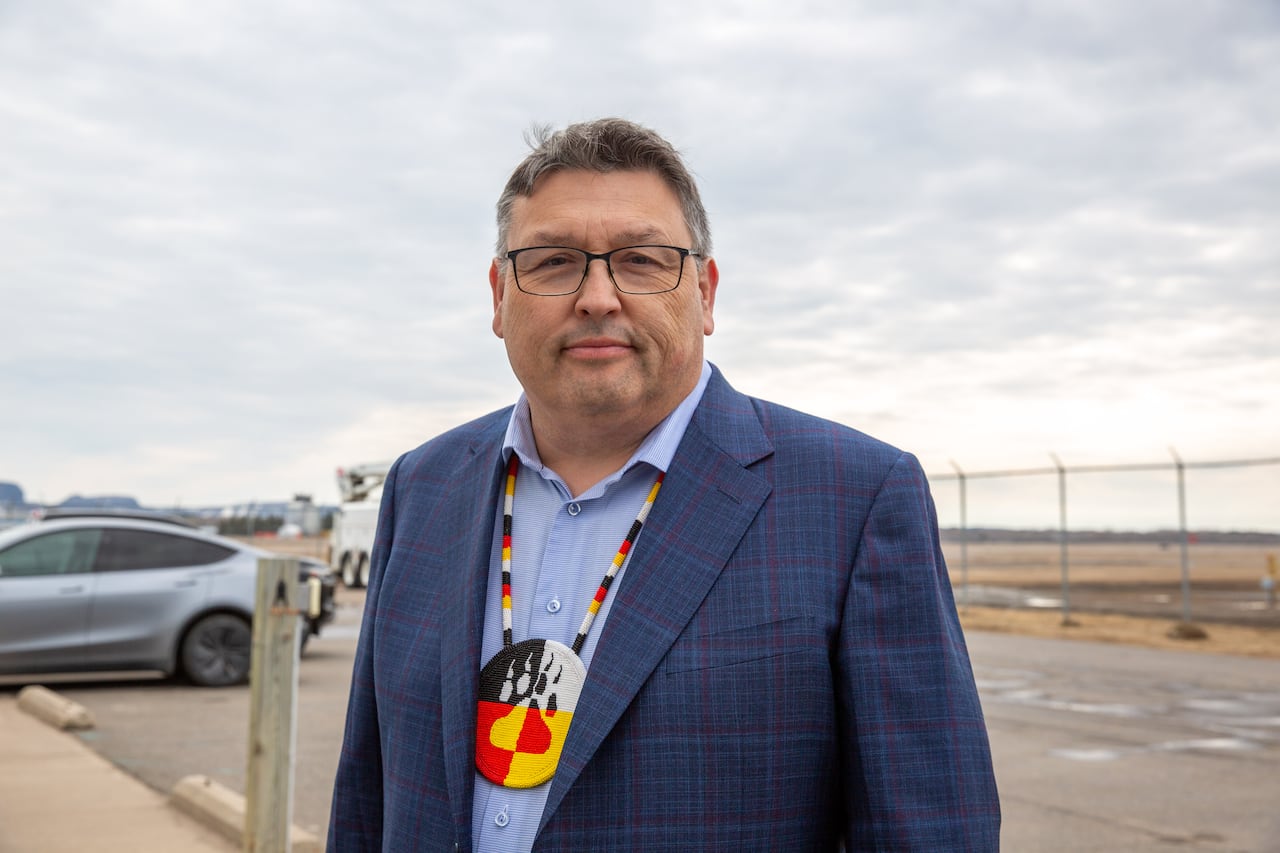
Clayton Wetelainen is the chief of Wabigoon Lake Ojibway Nation. (Sarah Law/CBC)
Bushby was initially granted day parole in August 2023. However, it was revoked in July 2024 after the PBC determined he had breached multiple conditions. At that time, Kentner’s sister, Melissa Kentner, shared with CBC News, “I felt like I was going to have a heart attack” upon hearing the news.
He was re-granted day parole in December 2025 for a period of six months, though full parole was denied, and received an additional three months of day parole in June 2026 in a community-based residential facility, which the PBC classifies as a substance abuse treatment center.
Full parole allows an offender “to serve part of their sentence under supervision in the community with specific conditions,” according to the Government of Canada’s website. “Offenders on full parole typically reside in a private residence.”
NAN labels parole decision ‘devastating news’
Nishnawbe Aski Nation (NAN), a political and territorial organization representing 49 First Nations in Treaties 9 and 5, released a statement Tuesday afternoon in reaction to Bushby’s release, describing it as “devastating news for Barbara Kentner’s family, the Wabigoon Lake Ojibway First Nation community, and the broader Thunder Bay area.”
“We are extremely disheartened to find out that her assailant has been granted full parole and that parole authorities have deemed him fit for reintegration into society. This feels deeply unjust,” NAN remarked.
During Bushby’s pre-release hearing on Thursday, he attributed his actions to “excessive drinking and poor choices.”
“You denied targeting the victim [Kentner] and maintained that the incident occurred as a result of having been drinking for three days and making foolish decisions,” the PBC documents indicate.
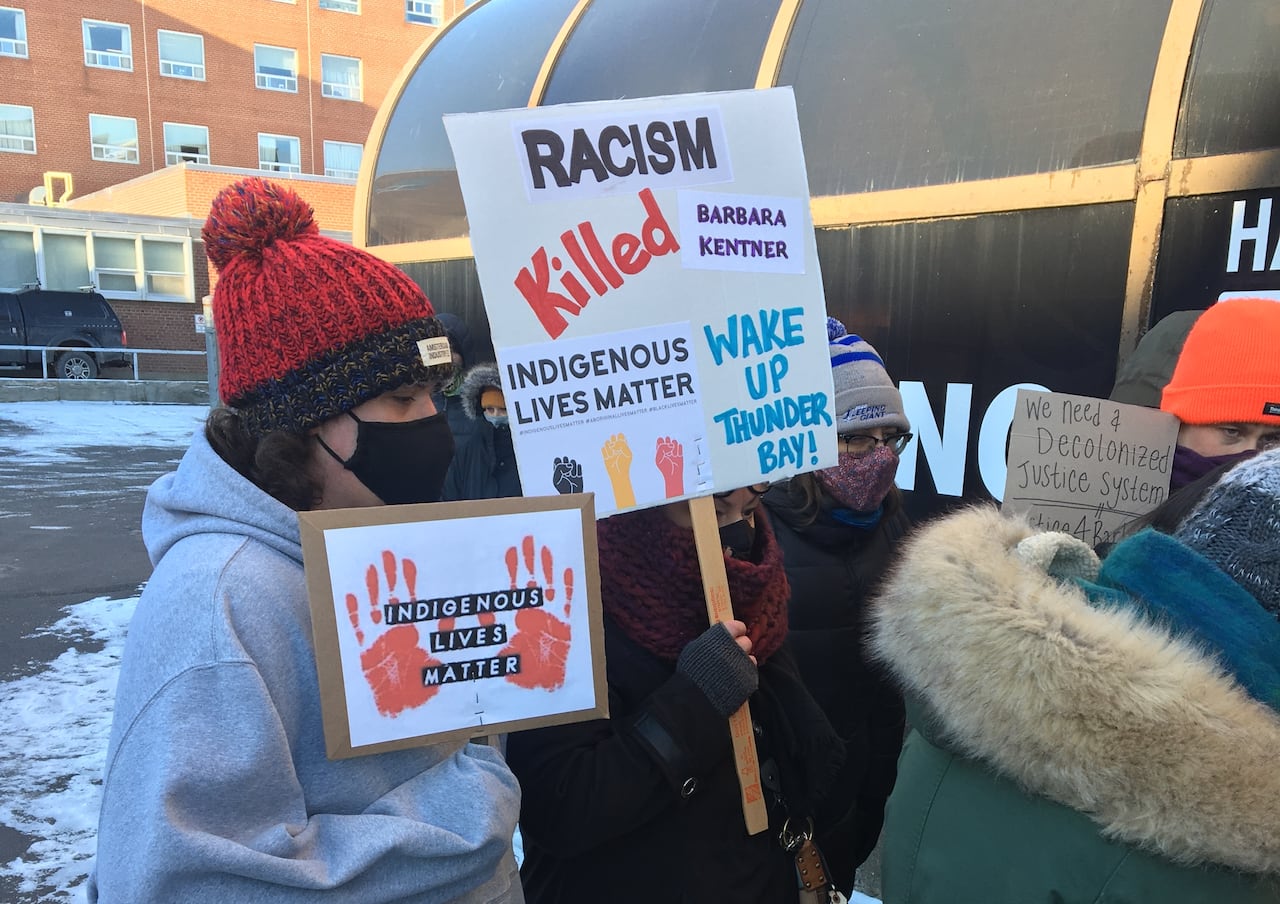
Individuals gather outside the former Camelot Street courthouse in Thunder Bay in 2020 as Superior Court Justice Helen Pierce delivers her ruling in the manslaughter trial against Bushby. (Marc Doucette/CBC)
Following the initial granting of day parole, Bushby had a Confederate flag tattooed on his chest.
“You mentioned that you once bought a truck from the United States that had a Confederate flag and that you liked it. You have southern heritage, and the choice of your tattoo was not motivated by racism,” the PBC documents state.
“You acknowledged that the tattoo was your choice and stated that you fell asleep during the process, being unaware of the final design until it was completed.”
-
Man convicted in 2017 trailer hitch death in Thunder Bay gets day parole extension
-
Brayden Bushby gets day parole in Barbara Kentner trailer hitch death in Thunder Bay after 1st one was revoked
Bushby was also involved in a minor car accident in March 2024, from which he fled and did not inform his case management team.
“It was also noted that you were suspected of being involved in a motor vehicle theft,” earlier PBC documents state.
The following month, he was stopped by police and found to be under the influence of alcohol.
-
Day parole revoked for Brayden Bushby, man convicted of trailer hitch death of Barbara Kentner in Thunder Bay
-
Barbara Kentner has been failed again, says family after Brayden Bushby gets day parole in trailer-hitch death
In August 2025, the parole board noted he was referred to work with a Black offender liaison officer after being recorded on video surveillance “cutting a swastika into the institutional lawn.”
In discussing this incident, “you expressed that it was not your best moment and that you were not thinking clearly. You did not fully grasp or understand its symbolism or the connection to historical atrocities until you participated in programming with the Black Cultural Advisor,” the PBC documents indicate.
NAN’s statement highlighted that “the parole board’s own findings recognize that Bushby has exhibited a repeated pattern of high-risk behavior.”
“We disagree with the board’s assertion that allowing Bushby full parole will not pose an undue risk to society. Anyone with a basic understanding of the racism and violence inflicted upon Indigenous individuals in Thunder Bay should realize that he remains a threat.
“Granting him parole communicates a dangerous and misguided message.”
‘This reflects systemic failure’
The PBC acknowledged the numerous victim impact statements submitted by Kentner’s relatives and friends, along with those from Indigenous organizations. These statements reflect “the consequences of yet another Indigenous woman losing her life, and the profound effects on the community given the intergenerational trauma stemming from both historical and recent losses,” it stated.
Bushby is required to adhere to seven conditions to maintain his full parole, which include:
- Participating in a treatment program addressing substance abuse, attitudes, mental health, and emotional management.
- Avoiding contact with individuals known or suspected to engage in criminal activities and substance abuse.
- Not using, purchasing, or possessing illegal drugs, aside from prescribed medications.
- Not consuming alcohol.
- Avoiding establishments that primarily sell alcohol.
- Not contacting Kentner’s family, directly or indirectly.
- Reporting all sexual and non-sexual relationships and friendships to his parole supervisor.
Cora McGuire-Cyrette, the chief executive officer of the Ontario Native Women’s Association (ONWA), commented on Bushby’s release in an interview with CBC News on Tuesday, stating, “this reflects systemic failure.”
“Homicide rates against Indigenous women have doubled since the national inquiry. As a society and community, we need to confront what has changed since [Kentner’s] death.
“Where are the investments aimed at preventing future tragedies? Are we going to do more than just raise awareness about this issue? Awareness without action will not lead to change, and this is precisely what we are witnessing here.”
Support is accessible for anyone impacted by the issue of missing and murdered Indigenous individuals. Immediate emotional aid and crisis support are available 24/7 through a national hotline at 1-844-413-6649.
Mental health counseling and crisis support are also offered 24/7 through the Hope for Wellness hotline at 1-855-242-3310 or via online chat at www.hopeforwellness.ca.