

If you noticed an increase in mosquito activity this summer, you’re not imagining things.
Several cities across the prairies experienced a surge in mosquito populations earlier this summer, leading to a complete sellout of bug spray in certain stores in Manitoba, Saskatchewan, and Alberta due to soaring demand.
Statistics from the City of Edmonton revealed that the mosquito count in the city was 15 times greater in July this year compared to the same month last year.
“Although these figures do not signify record-high mosquito populations for our area, they are a significant change from the previous two summers, which can amplify public perception,” explained Peter Daly, a biological sciences technologist at the City of Edmonton.
Saskatoon and Winnipeg also reported increased mosquito numbers in July compared to last year, according to data from those municipalities.
In southern Ontario, specialists attribute the significant rainfall experienced in various parts of the region this summer to the mosquito influx and the ongoing presence of itchy bites as late as September.
Fiona Hunter, a professor of medical and veterinary entomology at Brock University, noted that this summer has seen a notable rise in the Ochlerotatus trivittatus species in southern Ontario, compared to previous years.
Ochlerotatus trivittatus, known as a floodwater mosquito, lays its eggs in water-filled low-lying regions, making this year’s rainfall in southern Ontario ideal for their breeding, she stated.
“Consider all the rain we have had in southern Ontario this year. The saturated fields, low areas in yards, roadside dips, and other poorly drained locations have repeatedly accumulated water,” she pointed out.
“This creates ample potential habitat for this specific mosquito, which likely explains the high numbers we are seeing this year.”
-
Noticing more mosquitoes than usual this season? You’re not alone
-
‘Skeeter syndrome’ emerges in Alberta amid rising mosquito populations
This species is recognized for being particularly aggressive, she added.
“Thus, I believe people are simply encountering this species more frequently this year, which contributes to the perception that mosquitoes are especially troublesome right now.”
The heavy rains that drenched the Greater Toronto Area and several other communities in southern and southwestern Ontario may have also prompted the hatching of numerous dormant mosquito eggs, according to Rosalind Murray, an assistant professor of biology at the University of Toronto.
“This could lead to a temporary spike in populations, particularly in areas that experienced significant flooding like Toronto,” she informed CBC Radio’s Metro Morning.
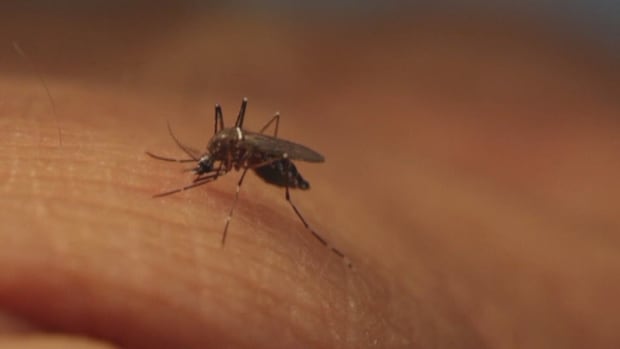
Due to heavy rainfall this summer, Ottawa continues to experience high mosquito numbers, even as residents look forward to their departure. The CBC’s Jenna Legge reports.
Colder temperatures will reduce populations
However, as the area begins to experience cooler nighttime temperatures, mosquito issues are expected to diminish.
“They struggle in extremely hot conditions, as they can dry out. They also perish quickly when temperatures drop,” stated Murray.
“Once we start hitting those chilly nighttime temperatures, such as below 10°C, we should see their numbers decrease. A frost will eliminate them altogether.”
This has been observed in Alberta following a recent cold snap, according to Ken Fry, an entomology instructor at Olds College in Olds, Alta.
Earlier this summer, Edmonton and Calgary faced a notably severe mosquito season, spurred by significant rainfall earlier in the year. However, Fry noted that mosquito populations have “essentially collapsed” due to the drop in temperatures in recent weeks.
Daly mentioned that Edmonton has already experienced a decline in the most prevalent local mosquito species, Aedes vexans, but pointed out that due to a warm fall thus far, “we haven’t yet observed as drastic a reduction in their numbers as in some previous years.”
Fry suggested that these insects might resurface as temperatures are expected to rise back to 20°C or more in the coming week in the region.
“However, I don’t believe we will see populations anywhere near what central Canada is currently experiencing.”