

A third beluga whale involved in the extensive transfer of animals from the closed Marineland park in Niagara Falls, Ontario, has passed away.
The Oceanogràfic de València announced in a press release that Jelly Bean died suddenly and unexpectedly during the night on Friday, just weeks after her arrival at the aquarium in Spain.
Jelly Bean and another beluga named Cleopatra were transported to the facility on August 27, alongside four dolphins, as part of international rescue initiatives.
“Recently, Jelly Bean had been facing challenges with feeding, leading the veterinary team to increase her observation,” the statement indicated. “During this time, she displayed signs of recovery and remained alert with her caregivers while receiving continuous monitoring.”
Oceanogràfic stated that its veterinarians will perform a necropsy with the assistance of pathologists from CEU Cardenal Herrera University to ascertain the cause of death.
Cleopatra and the four dolphins that accompanied Jelly Bean are reportedly doing well, according to the aquarium.
Minister asserts Ottawa took ‘reasonable measures’
Fisheries Minister Joanne Thompson expressed her sorrow over Jelly Bean’s demise and extended condolences to the staff at the Spanish aquarium.
“The Canadian government has undertaken appropriate actions to ensure the safe rescue of the whales, which includes issuing CITES permits after reviewing the transportation plan and granting Fisheries Act authorizations based on individual health evaluations for each whale,” Thompson stated in an email to CBC on Friday.
“I remain deeply grateful to the facilities receiving these animals and their teams for their kindness, dedication, and commitment to providing the belugas with the best chance for recovery.”
Two additional belugas died shortly after their relocation. Peekachu, aged 23, arrived at Shedd Aquarium on August 13 and passed away on August 25, while 20-year-old Rain died on September 2.
A resident beluga at Shedd, named Beethoven, also died following the arrival of the Marineland whales.
In a blog post on Friday, Shedd expressed its condolences regarding Jelly Bean’s death.
“From the beginning, the teams involved in this rescue recognized that many of these whales arrived with complex health requirements and that the journey ahead would be challenging,” the post stated. “The rescue provided urgently needed care and a potential path forward, but it could not guarantee positive outcomes. Each loss is profoundly felt.”
The post also detailed the care routines for rescued belugas Second and Osiris, noting that handlers are closely monitoring Secord this week due to decreased eating.
The relocations from Marineland were initiated after the park announced financial difficulties, stating that the whales needed to be relocated or they would face euthanasia.
The closed tourist attraction transferred all 30 of its belugas and four dolphins to five aquariums, with all but one located in the U.S.
Animal Justice highlights stress from transportation
Camille Labchuk, executive director of Animal Justice, remarked that Jelly Bean’s death was not unexpected.
She stated that the organization had cautioned the federal government that relocating the belugas could jeopardize their health.
“Transporting animals is extremely stressful,” Labchuk told CBC News on Friday. “This stress is intensified when dealing with a beluga whale that thrives in an aquatic habitat.”
She added that the animals may also endure stress from being separated from familiar whales and caregivers.
“Stress can compromise the immune system in any creature, including whales. It can lead to illnesses and even death.”
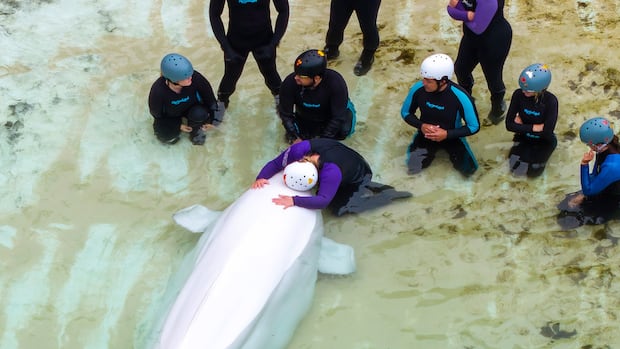
Marineland’s last six beluga whales, the final mammals in Canadian captivity, were transported from the closed theme park and flown to the U.S. Since July, a total of thirty whales and four dolphins have been relocated.
Labchuk mentioned that Animal Justice has been advocating since 2019 for the federal government to take a more active role in planning for Marineland’s closure and the relocation of its whales.
“It is incredibly frustrating to find ourselves in this situation, and we take no satisfaction in having predicted the whale fatalities.”
She emphasized the need for independent health evaluations of the belugas to be made public before their transfers.
“We still lack information regarding their health assessments,” Labchuk stated. “We do not know who conducted these assessments or whether they were impartial.”
‘There will inevitably be losses’
Marine mammal scientist Naomi Rose voiced her concerns to CBC News in July about the health of the belugas and the stresses associated with their relocation.
“This situation is without precedent,” said Rose, a senior scientist specializing in marine mammal biology at the Animal Welfare Institute.
She noted that the relocation process is stressful for the animals involved.
“For them, it feels like an unfamiliar experience akin to being stranded.”
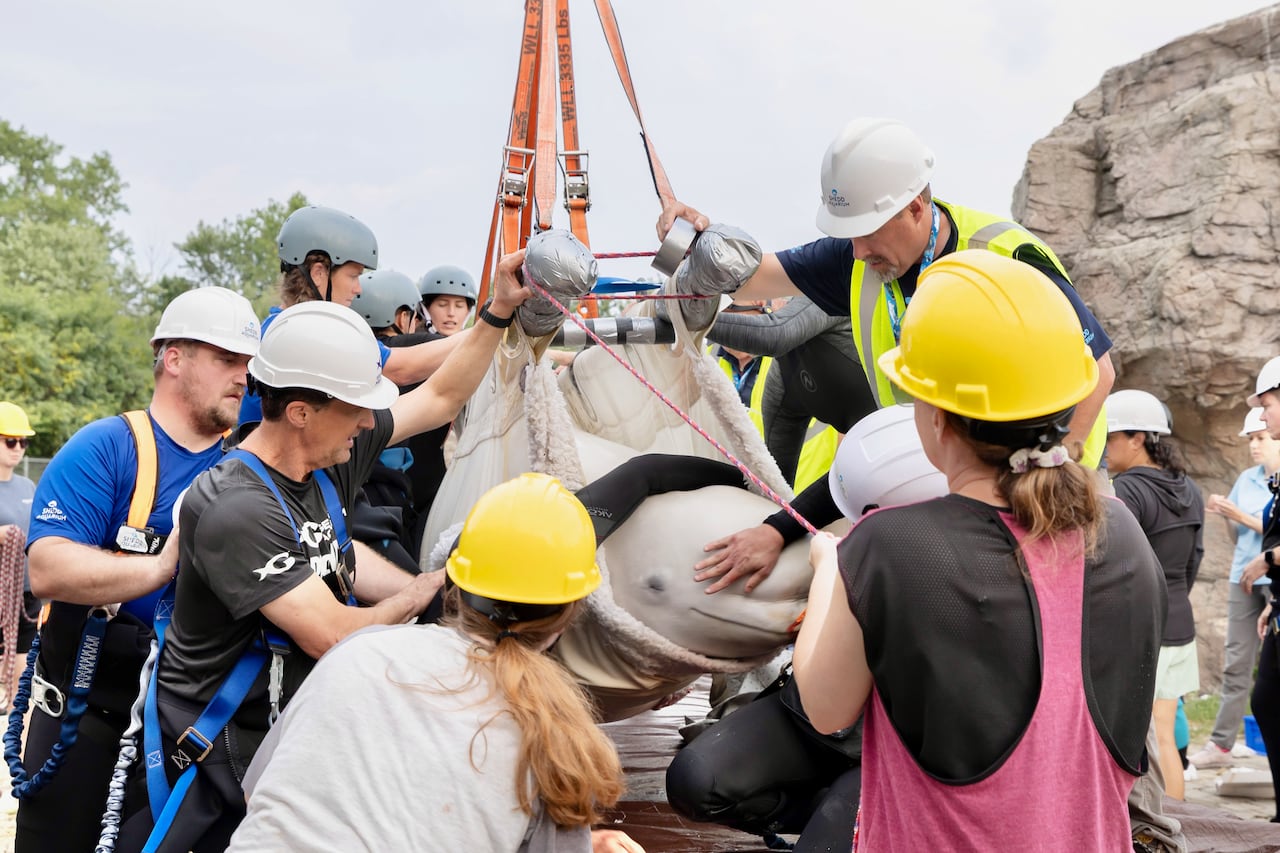
One of four belugas transported from Marineland in Niagara Falls to the Shedd Aquarium in Chicago. Two belugas and a resident beluga died shortly after their relocation. (Shedd Aquarium and Brenna Hernandez)
She cautioned about the risks associated with moving the belugas.
“I am concerned that some of these animals may either become critically ill or die under emergency circumstances.”
Rose had advocated for the temporary retention of the animals at Marineland while preparations were made at a whale sanctuary in Port Hilford, N.S., but progress in establishing that site has encountered delays.
She characterized the transfers from Marineland as “the best of a bad situation” and raised alarms about the potential future breeding of the whales.
Oceanogràfic emphasized that the teams involved in the rescue were aware from the beginning of each animal’s unique history and specific requirements.
The aquarium remarked that Jelly Bean’s death presents a “particularly challenging time” for the team responsible for her care.